

Hallo, Hallo dear hearts,
When it comes to ‘Jane Eyre’ – one could say I’ve had a unique connection to both the original novel & the [1996] adaptation; being that the version of the story I knew best all of these years was the film adaptation rather than the novel! I started reading the novel in [2013] as there was a readathon which was really quite cleverly assembled whilst I also found the Books of Eyre reading challenge shortly thereafter. The only trouble of course, is the fact I was pulled in and out of the context of the story multiple times – the most of what I shared ended being the first half of my readings of Eyre.

My main takeaways were the following from that initial reading of JANE EYRE:
In walked Jane Eyre, as calm as a willow bending in the wind,…
or should I say, that attribution belongs to another, a Ms. (Helen) Burns, of whom, Ms. Eyre draws a readily acquaintance and confidence as she’s removed from Gateshead and placed into custody of Lowood Institution for Oprhans! No, pray give leave, to express that Ms. Eyre is a firecracker of unrequited internal rage and admonition for her plight as thus handed down to her in life, as her parents are long since dead; her last surviving relation put to rest in the grave prematurely, and she is left to the dealings of her Aunt, [Sarah Reed, of the late Uncle Reed, her direct relation] of whom, is presented rather apt to reflect Angelica Houston’s character in “Ever After”, as she presides such blatant disregard for her niece, Eyre! It’s only in the reflections of Jane, as an older self, that we find a disconnect between the younger Eyre’s presumption of what was occurring and the wiser Eyre’s imparted understanding, that not all was as first known when the story starts to unfold!
The edgings of the story are wantonly haunting, as the world around Ms. Eyre is draped in grey tones, rain sodden exteriors, and the atmosphere of Gothic underpinnings, as there is rumours of a potential haunting of her Uncle, whilst alive was tender and kind towards Jane, but in whose death, wrecked a miserable state of affairs to unfold and befell her! I was quite appalled at her nephew’s extensive violence towards her, [in this regard, young Harry Potter lived comparatively comfortably!] and her Aunt’s diffidence not to correct the improper and unkind behaviour! Such grievances I can only try to attempt to tolerate, as I know the resolution of the story in-full, but that does not make it any easier to read or rather, observe her humble and caustic beginnings! If anything, it sets up in my mind how far Ms. Eyre had to transmorph into the resolute and strong adult she became!
As Brontë, deftly brings to life the under kernels of Eyre’s hardening and the porticoes of her knowledge that if she were to embark down certain pathways, she might not soon return! Much less, would she want to be such a creature!? To walk through this world, fully hardened and affaced to all the goodness that surely must still be present!? I can sympathise with her on this level, as when your day-to-day existence is presented in a continuous imprisonment of harsh punishment [solitary confined to the nursery, never allowed outside or downstairs, always finding reprimand rather than nurturing, and an absence of time being measured by usual perimeters!], I can understand her reasonings and her deepest of questions regarding not only the state of her personal affairs, but her state and place in the world itself! How angst ridden we should all feel, to have no Hope, no Light, and no perceivable exodus of our allotted circumstance!?
What staid with me throughout the entirety of the opening chapters, is the elucidation of Ms. Brontë, who thus effused her fictional work with counterparts of reality at each turn! She mastered the ability to absolve and absorb what weighed heavily on her heart, pouring out her grief and emotional keenings into the breath she gave Jane Eyre! She took the tragedies of her own life [her elder siblings died as a result of a school similar to Lowood!] and gave them a proper tomb to cleanse herself of feelings she most likely could not dissipate otherwise. I believe, its through her pen, she tapped into a greater purpose that gave her life meaning and worth, than anything she could readily achieve in her everyday life. She suffered greatly by her own experiences, as I read she and her sisters [Anne and Emily] were afflicted by anxiety disorders, but with her pen, she cast aside all of this, in order to cast into the world a tome of her intellect and wisdom.
As it would happen – when it comes to reading the *original canons!* of literature, despite being a newly renewed member of the #theclassicsclub – in the past, whilst I was still a slightly defunct member of the club, I fared better focusing on *after canons!* or sequels, re-tellings or ANY story inspired-by a work of Classical Lit rather than say “reading the original”? Quirky, yes? Cheeky, even? Check. This remained true of Eyre – I found myself happily consumed by the character & the world stitched out of “Keeping Kate” whilst I was moved dearly by the poetic voicing within the verse structure within “Jane and the Bertha in Me”.
Noting a juxtaposition from an after canon to the original within “Keeping Kate”:
From the first moment Kate Evans walks across the page, I felt a tightening in my heart towards her, as her spirit of self-awareness and of place within the folds of her life were very true to course! Kate is the kind of character I am oft-times in search of uncovering; not merely in Classical Lit but within the Contemporary realms as well! She has a captivating way of giving you just enough of a pause of thought on what is happening to her as to ground you within her scope of the story itself. She hasn’t had the easiest of lives but she’s not despondent about it either! No! She’s as bold and direct about her circumstances fate has dealt her as Eyre with the moxie of her predecessor for digging deep into her faith and placing a firm foothold into a future that surely must lead to something not quite as darkening as her childhood!
Rather than being taken to a Gothic estate set far away from active society, Kate is led to a small mountain towne in Utah, where the community she felt she would uncover would be quite ordinary turnt into an extraordinary settled development where estates were more regular than cabins! Tucked away from most conveniences, her new dwelling was a far cry of being the center of modern life and had a more natural bent towards embracing the natural world of which surrounded the ranch where she was accepting employment.
Thornfield Hall is turnt into ‘Thorne Field Ranch’, where Adele becomes Addie, and Mrs. Fairfaxes name receives a change of ‘firsts’. The ambiance of the place remains intact, to where opulence and finery outweigh sensible style and pleasure. Rochester has surely met his match in Mr. Thorne! I never thought you could quite elicit out a duality of whom Rochester was in both origin and spirit, but Tyler Thorne has nailed him in such a justifiable way as to honour him through reincarnation!
The main difference of course, is that instead of a dark secret in the attic that causes the most angst in the climax of Jane Eyre, in Keeping Kate Tyler Thorne is betwixt knowing how to shift forward in life after his wife abandoned him, claimed infidelity, and straddled him with a child of whom she insisted was not his own. Yet dealing with the reality of this situation and the layers in which are knitted into the in-between moments where Kate and Tyler find themselves quite bemuseful of each other’s company, therein lies the best choices Farnsworth gave the novel!
She doesn’t allow this to be a ‘quick fix’ nor does she make the situation feel ‘contrite or predictable’. She took the harder road — to show realistic choices, raw human emotion, and levelled it with honesty about the depth of the human heart. The pace of the story is the most beautiful aspect of Keeping Kate because it allows you to let the tides of the narrative wash over you, lull you into the shoes of the main characters, and take a reprieve from your own affairs.
Whilst I peered into the darker corners of ‘Bertha’ through poetic verse:
| Vintage Bertha Triptych : The Gothic Grotesque |
Segmented into three equally telling installments of Bertha’s psychological state, Martinez taps inside Bertha as she had lived and how her actions were precipitated by her awareness of how despairingly dire her need to free herself from her imprisoned state (as she saw it). For her, the only solution was to transcend the physical world and opt-out of this existence that was taking out her will to survive – she was shut-off from everything and everyone, completely isolated and left undone. Bertha could no longer conceptionalise reality much less equate out a living she could conceive that would stand her back on solid ground. Her choices were set in motion by the loss of her life long before she died – she was an empty husk of a woman who was no longer the girl of her younger years.
In this poem, her desolation is perceptively acute and her state of unwellness is keenly portrayed by a woman whose unravelled her mind to where nothing else matters but the release of the pain which has become her living hours. It’s a sobering snippet of a woman’s life whose lost the battle to gain wellness in the face of an obstacle she could not surmount. I felt Martinez expertly gave Bertha a voice in this poem, and granted a bit of new insight into her state of mental health at the time of the fire itself.
All of this was preparing me in many regards to seeking out “The Other Wife” and uniquely towards a passage back into “Jane Eyre” itself. On Friday, the day and night before #SatBookChat, I re-entered the realm of JANE EYRE through the audiobook adaptation by Naxos Audiobooks with the narrator Amanda Root. It was through this listening period I started to shift into the darker corners of Rochester’s life with Bertha as previously I hadn’t reached the point in the novel where her presence was more pronounced, explored & brought to the foreground of Jane’s own journey at Thornfield Hall.
I knew JANE EYRE was a darker tale – somewhere in the back of my mind, however, the film adaptation painted the portrait of this being a darkly lit romantic tale with unknown suspenseful elements that worked well with the Gothic undertones. If anything, for me, having come through the film adaptation first – it felt more like a Dark Romantic Suspense rather than what it truer is shaping up towards being which is a keenly insightful & dark work of Women’s Fiction. The difference was only seen as I started to shift forward past what is known (to me) and what was yet unknown – where the layers are being peeled back a bit further – to where Rochester is being seen slightly differently than I remembered him in the film – where you took pity on his character for his plight and how it seemed to be unravelling into a grimly dark romance with a spark of hope at the end of the dark tunnel.
I also knew THE OTHER WIFE would be equally as dark – as not just owning to the canon, as this is a tale “inspired by” rather than strict re-telling, sequel or re-imagining of the original – I wanted to explore the components of what made this Contemporary tale uniquely different before broaching into a book discussion with its co-authors: Ms Alison May & Ms Janet Gover.
I wanted to develop a unique interview with them as the writing team of “Juliet Bell” as a precursor to the discussion which would arise through #SatBookChat – thus giving everyone who wanted to attend the chat a solid idea about what THE OTHER WIFE involves and what kinds of inter-related topics could be broached during the chat itself. I decided to keep their responses intact as they gave them to me – as I wanted this to be a bit of a round robin interview – where I would pitch the same questions to each of the authors & they in turn would respond. You’ll find this is one of the more interesting conversations I’ve shared – as it has a duel perspective attached to it whilst it gives you a keen insight into collaborative writing styles & the inspirations to telling the stories which motivate our writerly hearts to write.
You’ll also note I left this informal rather than formal – as I never actually have an interview where I don’t mention an author’s last name in the response lines – however, this was organically knitted out by the authors themselves and I liked how it flowed through the conversation. I decided to keep it authentically honest as it developed & share the conversation as it moved into the harder hitting aspects of JANE EYRE whilst it also talks about what separates THE OTHER WIFE from the canon.
Kindly brew your favourite cuppa & grab something to eat as you settle into the convo!
Be sure to follow our chat’s tag #SatBookChat | use it to contribute to the discussion
Starting @ 11a NYC | 4p UK – follow @SatBookChat for updates!

On my connection to the authors:
From approx. January 2014 – June 2018, I was a reviewer for ChocLitUK whilst I hosted a bookish chat featuring ChocLit novels & their authors entitled #ChocLitSaturday (@ChocLitSaturday). The chat was renamed @SatBookChat in January, 2018. During this period of time, my path crossed with a lot of authors publishing with ChocLit and I had the grace of being able to read nearly all of the Coorah Creek novels during that experience, however, I did not have the chance to read “Little Girl Lost” which is the latest Coorah Creek novel outside of the Christmas novella (a Digital First release) which correlates with the series itself. Coorah Creek was the series penned by Ms Gover whereas in regards to the works by Ms May – I was able to feature a spotlight on her Christmas novellas which were re-released into an anthology in print – an edition I had sought to read and review but didn’t get the proper chance to do so. I also was keenly intrigued by her after canons for Shakespeare as I love the Bard & the original stories he gave us to enjoy. These stories are part of my TBR of ChocLit novels, novellas & pocket stories which I look forward to one day being able to read properly (either in print or audiobook).
I am disclosing this connection to you as I have maintained an active connection of communication with the authors I’ve read through ChocLit whilst being a conversationalist on Twitter – either for the chat I hosted and/or outside of it. Even if I have a connection to an author, I am still able to feature their current stories, their backlist titles or any other projects their developing hereafter as I approach each story separately from the ones I’ve read or experienced in the past. I go into each new story with an open mind and thus can give my honest impressions on its behalf.

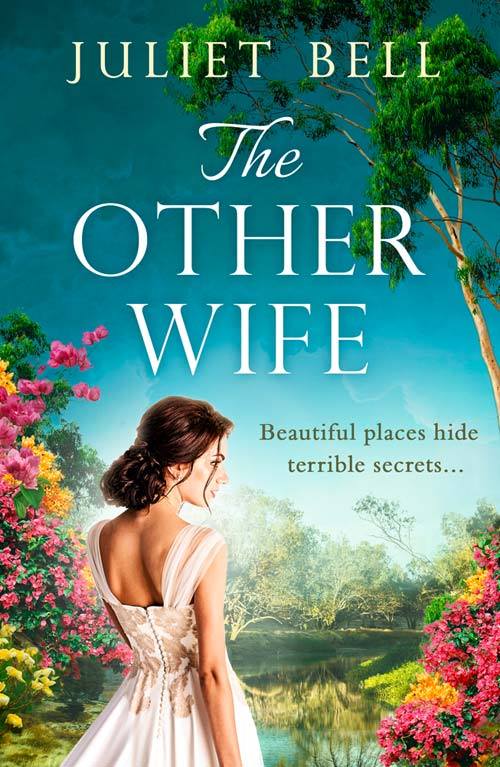 The Other Wife
Subtitle: Beautiful places hide terrible secrets
by Juliet Bell
Outback Australia, 1981
After a terrible childhood, Jane comes to Thornfield as nanny to the adorable Adele, watched over by the handsome and enigmatic Edward. Plain and inexperienced, Jane would never dream of being more than his hired help. But swept up in the dramatic beauty of the Outback, she finds herself drawn to Edward. And, to her surprise, he seems to return her feelings.
But Jane is not the first woman Edward has pledged to make mistress of Thornfield.
As a child, Betty was taken from her English home and sent for adoption in Australia. At first, no-one wanted her, deeming her hair too curly, and her skin too dark. Until the scheming Mr Mason sees a chance to use Betty to cement a relationship with the rich and powerful Rochester dynasty…
When Jane discovers Betty’s fate, will she still want to be the next Mrs Rochester?
Places to find the book:
ISBN: 9780008323011
Published by HQ Digital
on 24th January, 2019
Published By: HQ Digital UK (@HQDigitalUK)
an imprint of HarperCollinsUK (@HarperCollinsUK)
Formats Available: Ebook *and!* Trade paperback → Happy #PubDay!
Converse via: #JaneEyre + #TheOtherWife; #WomensFiction
#Classics Retold OR Stories Inspired by #ClassicLit; #CharlotteBronte or #Bronte200 & #Brontes
As you have re-imagined two Classical stories thus far along “Wuthering Heights” and “Jane Eyre” – how do you select the stories you’re going to re-tell and re-imagine? Is there a process to it or is it a bit more serendipitous? What pulled you in the direction of co-writing these kinds of stories as well?
Janet says : Wuthering Heights was my choice. It has always fascinated me. It’s a dark and violent book – not a romance at all, despite what some people would say. I always wanted to explore the how passions and emotions of the characters would evolve in a different, but equally tumultuous time.
Alison says : Wuthering Heights was the easier choice of the two – Janet suggested it and I felt very connected to the setting and the time period we chose for our adaptation. Jane Eyre was trickier. In some ways it’s the obvious follow on from Wuthering Heights, but it’s a subtler, less in your face, book in a lot of ways. What drew me to it though was still that question of ‘is this a romance?’ And if not, what makes people think that it is?
As you know, out of the two novels you’ve adapted and re-imagined it is this current release which itched my curiosity to read rather than the original one. Mostly as through previously chats during @SatBookChat, I learnt that ‘Wuthering Heights’ was simply not my cuppa so to speak. With ‘Jane Eyre’ – I have a history of entering through the after canons & finding my way back into the canon – which is why I find it most curious how people step away from Jane & Rochester’s story and depending on which portal of entry they took – how do their opinions differ on this question? Is it a Dark Romance or is it a cautionary Women’s Fiction tale?
Of the two, the novel I am most eager to be reading myself is “The Other Wife” as I am a huge appreciator of “Jane Eyre” – what was fundamentally important about how you approached writing this story? What did you want readers of Eyre to recognise in your version and what were you hoping they’d accept as creative liberty when re-telling a Classic?
Alison says : The Other Wife was never going to be just a re-telling of the original story, and we have changed a lot. It’s more ‘inspired by’ Jane Eyre than a retelling of Jane Eyre. Having said that some things were absolute – I think there has to be a first Mrs Rochester. I think Jane’s childhood has to be there as it’s central to the woman she becomes. In terms of reimagining the story, I think we were both interested in the idea of giving both those women a new voice.
Janet says : As a character, Jane is loved because she is independent and willing to buck convention. But the actions and attitudes that were considered independent and a bit shocking in her day would seem quite tame and ordinary today. Our challenge was to make her still independent and unusual in this world, which is so very different from the world of the Brontës.
I suppose I use the term “re-telling” rather graciously – which is why I started to amend how I was promoting our #SatBookChat this week to reflect “inspired by” in lieu of further misunderstandings in case how I was referring to the story altered people’s perception of what the story is really meant to be like to read. I readily admit, the way I conceptionalise terms is not always in-line with popular definitions. I do agree with you on both points, Ms May- without those rooted fundamentals the story would be a completely new incantation of a different story altogether!
As I move into reading ‘The Other Wife’ – I look forward to seeing how you bent tradition & conventional expectations of women whilst also rooting your tale in the darker undertones we’d expect from the original as it is quite a darkly lit tale overall.
What is it about the character of Bertha, otherwise well known as the mad woman in the attic which inspired you to re-explore her journey and her character’s history?
Alison says : This is an easy one… In Jane Eyre, Bertha is just the mad woman in the attic. She doesn’t have a voice. She’s really not much more than a problem for Jane and Rochester to overcome. We wanted to know who this woman might be, and how she ended up locked away. Our version of Bertha – Betty – is as important a character in our story as Jane herself.
Janet says : We also wondered if she and Jane had things in common. After all, they both fell in love with the same man. And he wanted both of them. And of course the big question was what would happen if they met… really met rather than just that brief encounter on the day of the wedding that didn’t happen.
I’ve been a bit curious about Bertha myself – as again, I entered this outside the novel and thereby my impressions are a bit more random than most readers. Coming through the audiobook and the print edition ahead of the chat itself – I am finding myself even more curious about her back-history and what led her to be the woman she became ‘now’. I’ve seen a glimmer of her through the poet’s eyes (as shared in the top anchour) but so much remains elusive; out of reach and just past what we can imagine. It would be keen to see where your muses took you to explore her through Betty.
You have a valid point – how do they seem together and apart? Are there traits in common or was there something else that united them in their admiration and love for Rochester?
What captivated you about Rochester? As a man, as a character and as someone who was caught between the woman he once loved and the woman he dared to love despite everything that had happened?
Janet says : This might be heresy, but I have never liked Rochester. When you listen to him talk, it’s all ‘Me Me Me’. He wants to marry Jane because she will save him, not because he wants her to be happy.
I can probably forgive him locking Bertha in the attic, because it’s a better option than sending her to Bedlam, but I cannot forgive him for lying to Jane. He was willing to lead her into bigamy, a terrible sin in the eyes of her church, and ruin her socially, for his own pleasure and need. That’s not heroic behaviour. And his failed attempt to rescue Bertha from the fire does not redeem him.
Come to think of it – I probably can’t forgive him for locking Bertha in the attic.
Alison says : Rochester is fascinating, but more because of what he tells us about ourselves. He locks his wife away, and then lies to his new girlfriend and is all set to commit bigamy. But so many of us see him as a romantic hero. That made reimagining him really interesting. My rule is simply this – if your best mate was dating this guy what would you think? I think you might be warning her off the dude with the lady locked in the loft.
Hmm,… the Rochester I saw in the film was more endearing as I had to let this response percolate a bit in my mind before I responded as this reply and another one took me for a bit of a loop as my memories of Rochester and of the story of Eyre differed greatly from the thoughts being shared – until I tapped into the reasons ‘why’ those memories were slightly askew from the discussion at hand. For me, the film painted the whole portrait of their lives as a one traumatic and tragic dark romance wherein you feel empathetic for Rochester and Jane in equal measure. However, as I dug deeper into the novel – you start to see Rochester slightly ‘differently’ than I had originally – to where, yes, his intentions and his motivations are quite self-serving.
The crust of your disdain for Rochester, I have to await finishing Eyre as I honestly don’t know really how I feel about him now that I’ve met him front & centre in the novel! On the surface though – there is a heap of truth in what your saying but I wanted to wait til I could see how I felt once all was known and read. Or in this case ‘read and heard’.
I had to smile when I realised this was set in the Australian Outback (having appreciated Coorah Creek) – how did you develop the idea of time, setting and locale for “The Other Wife” and how important was it to have it rooted in its own sense of self and history therein?
Janet says : It is my revenge. Alison is from Yorkshire and bullied me terribly about my use of Australian words when we wrote The Heights. This was my chance to get back at her. (Just joking about the bullying of course… but she did send me lists of words I was not allowed to use).
Alison says : Yeah. Australia was all about Janet getting her own back for me not letting have a teenage girl from 1980s Yorkshire say ‘dunny’!
Janet says: Jokes aside – we needed a place where a woman could be locked in an attic in the 20th century with no-one noticing or calling the police. Suburban London was not going to work. It had to be somewhere with a lot of empty space around it. When it comes to empty space, Australia has lots. The Brontë novels are rooted in the social expectations and rules of their time. So it seemed important to use to explore the same things in our books, hence the decisions to use the miners’ strike in The Heights and the sexual revolution and lands rights movements in The Other Wife.
I had to laugh – seriously, you two left me in stitches more than once during this conversation!
There is so much in this reply that is good fodder — such as how would you have someone ‘disappear’ from life and not be noticed without suspicion? Very keen problem to resolve! I think this is also why Contemporary writers have angst with technology, especially cellular phones and hand-held gadgets as there is a lot of tech to circumvent to keep pacing on high octane for thrillers and suspense purposes; but you’ve had the opposite issue – lo-tech and analogue issues in some ways, to where no one would notice what was amiss because for them nothing would be observational as to being ‘out of place’ or out of sync with everyone else.
I was curious about the name “Juliet Bell” as it is a pen name you are both writing under now as you take classical literature and re-spin their tales together – what inspired the name and did you develop a bit of a byline or explanation about this name?
Janet says : We knew right from the start that our pen name would be Bell – as a tribute to the Brontës who wrote under that name when they were hiding the fact that they were women.
We talked about a first name for ages and didn’t come up with anything we liked.
When our editor was briefing the cover designer on the first draft of the cover for The Heights, she told her to put Julia Bell as a joke because our agent’s name is Julia. The designer heard it wrong and put Juliet. We all loved the cover (we still do) and we loved the name, so both stuck.
This back-story on your pen name is beyond adorable! It is so serendipitous and lovely – especially about how innocent it was to be created and how well it worked for what you needed it to convey! Wicked #awesomesauce!
Is the 19th Century the timescape of inspiration for you both moving forward? As both novels you’ve written thus far were originally published during that century – it made me wonder, what captured your heart and imagination about the authors & their stories from the 19th? What pulls you into those stories more so than other centuries?
Alison says : I think I’m pulled more to the work of the Brontës than to a particular time period. I’d love to adapt The Tenant of Wildfell Hall one day. I love the darkness that all three sisters explore in their writing, albeit in very different ways.
Janet says : My father gave me a love of reading, and introduced me to some of his favourite classic literature. A lot was early science fiction and horror – H G Wells, Jules Verne and Edgar Allan Poe – but also some of the epic classics. Tolstoy anyone? You might even find some Greek tragedies on my book shelf if you cared to look. As a writer, I love to see how styles have changed over time. As a reader, I think anything that has been loved for so long has to be worth reading – even if in the end I decide it’s not my taste.
Ahh, you’ve broached a novel I still have on my Classics TBR – hmm,.. that would be rather clever if that became your ‘next’ Juliet Bell release and I was able to time my readings of it to be in-line with the next story you publish. Food for thought. As for me, I came into Classical Literature a bit haphazardly – a topic I explored during 2017’s #AustenInAugust as I wrote an essay about my love affair with Jane Austen – which could extend into my admiration for the Brontës as well. Thus why I’m a newly active member of #theclassicsclub as I want to re-inspire myself to dig deeper into the Classics and root out which authors & stories really do resonate with me now as an adult. As a younger reader, it was Shakespeare who held my attention the most – the Old World English phrases actually is what hooked me – I had a love of language, linguistics and words from a very, very young age.
I know you must already be thinking ahead towards your next novel – what can you reveal to my readers about what comes after “The Other Wife” and the kind of selections you’ll be making down the road? Any hints towards themes or settings or even possible Classics you’ve been considering on a short-list to re-tell? Of course you could send us down a red herring as well. Laughs.
Alison says : Writing together is fun, and we have both learned a lot from the other – mostly we’ve learned that I underwrite horribly and Janet overwrites just as badly. Right now, we’re both working on solo projects. We are excited about those and it’s interesting to see how our individual writing routines and styles have changed because of the collaboration.
When we are both clear of these, who knows? Neither of us are big on planning that far ahead – and both of us are likely to be distracted by the next shiny idea that waves from the corner of the room.
I love how your letting it develop organically – not chasing after the story to tell next but rather letting a story which you will enjoy to write together find you in the time in which it should be written. It is the best writerly attitude and outlook to have as it takes the pressure off of producing new material and gives you the chance to reconnect when the characters & the new world are meant to become introduced to your pen. Wicked brill, truly!
Prior to contemplating co-writing, how did you each approach Classical Literature originally? Was it something you loved to explore or did you find the stories a bit too set back to where their stories needed refreshing for today’s literary world? Were there specific authors you gravitated towards or types of stories that interested you more so than singular authors?
Alison says : I’d written two adaptations before becoming half of Juliet Bell. Both of those were romantic comedies based on Shakespeare plays. (Sweet Nothing, based on Much Ado About Nothing, and Midsummer Dreams, based on A Midsummer Night’s Dream.) I do love writing adaptations. I like the technical challenge of working out what are the essential elements of a particular story and seeing how you can translate them. As a reader, or audience member, I’ve always loved Shakespeare, and I love the Brontës obviously. Beyond that my attitude to classic literature is probably the same as to contemporary fiction – there’s stuff I adore (1984, Fanny Hill, Candide) and stuff you couldn’t pay me enough to read again (Hardy. Anything by Hardy.)
Janet says : Writing styles have changed so much. Many of the classics that we love wouldn’t find a publisher today. If you read, for example, Moby Dick, the story gets lost a few times amid long descriptions of whaling ships and the migration of different breeds of whale. In The Hunchback of Notre Dame, there are whole chapters on the architecture of Paris and the design of roofs that would fall victim to an editorial red pen. It’s not bad writing – it’s the writing of the time.
I love to look beyond the writing style to the heart of a story and I like to wonder how those characters or that story would sit in today’s world.
Ooh yes, I do know of your Shakespeare comedies as I spied those rather quickly – I had meant to read them during the Spring months over the past years but someone, Spring was never a kind season for me as it is the height of the woes I face with pollen. I had to smirk when you said Hardy — he’s on my Classics TBR and I’ll have to wait to see what your referencing once I get round to reading something by him! Of course, lately, I’m opting for more audiobooks so perhaps my impressions of his works might differ slightly as I notice audiobooks give me a slight advantage in being able to soak a bit faster into the older texts than if I were to read them directly in print the first go-round.
Ooh dear, on premise and execution alone – ‘Moby Dick’ was one of the reading selections I boycotted in school right alongside ‘Of Mice and Men’. I was quite infamous for my boycotts – I also had keen issues with dissections and managed to take some personal days off from having to experience them. Not really keen on the Hunchback either – but in theory of what your referring too here, yes, I do understand. There are certain changes in context, structure, and narrative styling that has altered through the years – in some ways, the key components of what I miss in Contemporary stories is why I opt to read more of the Historical past through Historical Fiction narratives – I love the girth of how stories are told and the quiet ramblings of longer exchanges of dialogue or simply a more descriptive narrative which can root me into a timescape so wholly true of its time and setting, I dare not wish to exit.
In regards to retelling or re-envisioning classical works – it is practically a hobby of mine since I became a book blogger – as I’ve read a lot of inspired by stories & adaptations of Classical Lit and/or Fairy Tale Fiction to where I’ve now discovered I love finding adaptations for Mythological Folklore!
What is one surprising fact about how you wrote “The Other Wife” and what does it give you the most laughter?
Janet says : My total inability to write sex scenes. Seriously. None of my books have sex scenes in them. One of the key things about The Other Wife is the sexuality of the two women – Betty (as we called Bertha) is a sexual creature. She is the fire. Jane is an innocent. She is ice. We needed sex scenes … and I failed utterly at writing them. We laughed a lot at my attempts, then Alison rewrote them and made them better.
Alison says : Janet’s total inability to write sex scenes. And our unending ability to bicker with one another about document layout.
I’ll just leave this here… you covered the bases quite well. Mind, I never thought anything was amiss in Coorah Creek… I loved how they were written.
Of all the film adaptations for “Jane Eyre” which is your personal favourite and why?
Alison says : Ooooh. Good question. I love the BBC version with Ruth Wilson as Jane. I think her performance is wonderful, and Toby Stephens could almost make me see Rochester as a romantic hero. Almost.
Janet says : I love the 1943 black and white version with Orson Welles and Joan Fontaine. Some of the cinematography is startling and evocative. Welles to me is a good Rochester, self-centred and bullying. And I just adore the beautiful and very young Elizabeth Taylor as tragic Helen.
And, Jorie picks a different adaptation as her favourite – thereby, I need to see if I can get these versions through my local library as part of celebrating finishing ‘Jane Eyre’ is having a proper marathon of the adaptations in film! Wicked thanks for the suggestions!
Of all the after canons focused on Eyre, Rochester, Bertha and the components of the story – are there any which you felt were a close cousin to your own approach of writing “The Other Wife”?
Alison says : Nothing jumps to mind, which is good actually. We tried really hard to do something fresh with the story. The Wide Sargasso Sea is well known, and puts the Bertha character at the centre of the story, but in a completely different way. I hope The Other Wife feels like a brand new interpretation of these characters.
I’ll be reading about “Wide Sargasso Sea” after I conclude Eyre and before I read “All Hallows at Eyre Hall” which was my intention all along a few years back. I’ve been wanting to get into reading sequels and after canons for Eyre for so long it has practically felt like a dream rather than an obtainable goal. Til now, of course! I do love how you’ve conceived of an original idea and thereby given everyone a stronger reason to seek out “The Other Wife”. The only story I knew about which dealt with Bertha outside of this one was “The Madwoman Upstairs” but I’ve not had the pleasure of reading it yet.
I am most curious to ask – who wrote the first opening sentences and who wrote the last? Was it a mash of ideas between the two of you or did you each take turns sorting out how the story would open and close?
Janet says : That’s a really good question, and it made me think. It turns out that I wrote the first drafts of first and last scenes of both books. That was an accident really. Alison wrote the original first scene for The Other Wife, but our editor wanted a different scene and it was my turn to re-write. But there isn’t a single scene in the book that doesn’t have something of both of us in it.
Alison says : I believe Janet! Honestly I would have to go and check to find out. One thing about writing a collaboration is that you can’t be precious about who writes what. By the time the books come out every single comma and full stop has had both our eyes (and our editing felt tips) over it several times so remembering who originally wrote what is a bit of a challenge. For the bulk of The Other Wife, I wrote the first draft of Betty’s story, and Janet wrote the first draft of Jane’s, but then we both took everything the other had written apart and rebuilt it until have a Juliet Bell book, rather than an Alison May or a Janet Gover book.
Thank you for this wonderful insight – I oft wondered how it would work to write in collaboration and you’ve given me a keen knowledge of how it could be approached! I hope others find it equally beneficial and inspiring! The best of it really is how you said there is a blurred line between where each of you have your influence and how the whole story simply becomes conjoined; which if I recollect is what Heather Webb and Hazel Gaynor mentioned themselves!
This interview is courtesy of the writing team behind “Juliet Bell”:
About Juliet Bell

Juliet Bell is the collaborative pen name of respected authors Janet Gover and Alison May.
Juliet was born at a writers’ conference, with a chance remark about heroes who are far from heroic. She was raised on pizza and wine during many long working lunches, and finished her first novel over cloud storage and Skype in 2017.
Juliet shares Janet and Alison’s preoccupation with misunderstood Classic fiction, and stories that explore the darker side of relationships. Follow their collaborative journey with the links attached to this biography.
----
Alison May also writes commercial Women’s Fiction and Romantic Comedies and can be found under "Secondary Blog".
Janet Gover writes contemporary romantic adventures mostly set in outback Australia and can be found under "Secondary Site".
I am especially grateful to Ms Gover & Ms May for extending me the opportunity to talk about their lovely new release in paperback “The Other Wife” whilst having an open discussion about the elements of Jane Eyre, the vision of Charlotte Bronté and the unique journey writers take to bridge the past & the present into new works of literature which beg of us to ask harder questions about the heroines & heroes of Classical Literature.
Help spread the word by RT / favouring this tweet:
.@joriestory | #JorieReads the #Classics & their after canons
🦔Two Authors, One Novel = wicked journey!
🧁#writing insight for collaborative teams
🦔#amwriting stories based off #JaneEyre
🧁Lively #interview before #SatBookChat📌https://t.co/nTxZt8TGPS | #WritingCommunity pic.twitter.com/uA6kmydne7
— Jorie Story 📖🎧 (@joriestory) January 26, 2019
{SOURCES: Cover art of “The Other Wife”, book synopsis, authors photograph of Alison May & Janet Gover (representing “Juliet Bell”) and authors biographies were all provided by the authors themselves and are used with permission. Post dividers by Fun Stuff for Your Blog via Pure Imagination. Tweets were able to be embedded by the codes provided by Twitter. Blog graphics created by Jorie via Canva: Conversations with the Bookish and the Comment Box Banner.}
Copyright © Jorie Loves A Story, 2019.
I’m a social reader | I tweet my reading life:
.@SatBookChat | this coming #SatBookChat you could say we're going to get our #Classics discussion generating! Esp in regards – where do your thoughts lie on #JaneEyre + Rochester? What about Bertha? And, how does this parlay into retells/sequels & inspired by STORIES? *Clue 1👇 https://t.co/E3iBZsWulp
— Jorie Story 📖🎧 (@joriestory) January 22, 2019
?#SatBookChat – alums from ChocLit are co-guests during this week’s #SaturdaysAreBookish chat feat. @MsAlisonMay & @janet_gover – as you might have remembered Jorie spilt the news for their latest co-authoring release “The Other Wife” when she said ooh #JaneEyre!!
— Jorie, the Joyful Tweeter?? (@joriestory) January 22, 2019
.@SatBookChat I was going to keep ‘mum’ about this til the morrow but ooh my dear sweet?- #amediting a wicked brill #interview arriving via #JLASblog the morning of #SatBookChat *before!* our lovely round robin discussion of “The Other Wife” – I just had to burst out the NEWS ?
— Jorie, the Joyful Tweeter?? (@joriestory) January 22, 2019
Come and join us on Saturday – I'll be there. https://t.co/uNWwze7hbd
— janetgover (@janet_gover) January 23, 2019
Can't wait to discuss #TheOtherWife with you; whilst we cross-compare the canon of #CharlotteBronte & the origins of thought emerging out of #JaneEyre!😉#SatBookChat is going to be a wicked good chat *AND* I can't wait to share the lovely co-author interview w/ you all as well!😌
— Jorie Story 📖🎧 (@joriestory) January 23, 2019
.@SatBookChat | *Saturday!
🦔Discussing #TheOtherWife
🧁Inspired by #JaneEyre | #CharlotteBronte
🦔Chatting about Collaborative Writing & Classical Lit
🧁#WritingCommunity | #amwriting
🦔#WomensFiction | #Romance
🧁Join us via #SatBookChat👉NEW CHAT | 26 January @ 11a | 4p UK pic.twitter.com/PC6WshSPXZ
— #SatBookChat (@SatBookChat) January 25, 2019
I love Jane Eyre!!!
— Jess Woods (@JessWoods18) January 25, 2019
This Saturday both halves of Juliet – @MsAlisonMay & @janet_gover – will be joining @SatBookChat to talk about #TheOtherWife (https://t.co/b5ePkFFdjB), what makes a romantic hero, writing collaboratively and anything else you want to ask them about. Join us! #SatBookChat
— Juliet Bell (@JulietBellBooks) January 24, 2019



Leave a Reply